

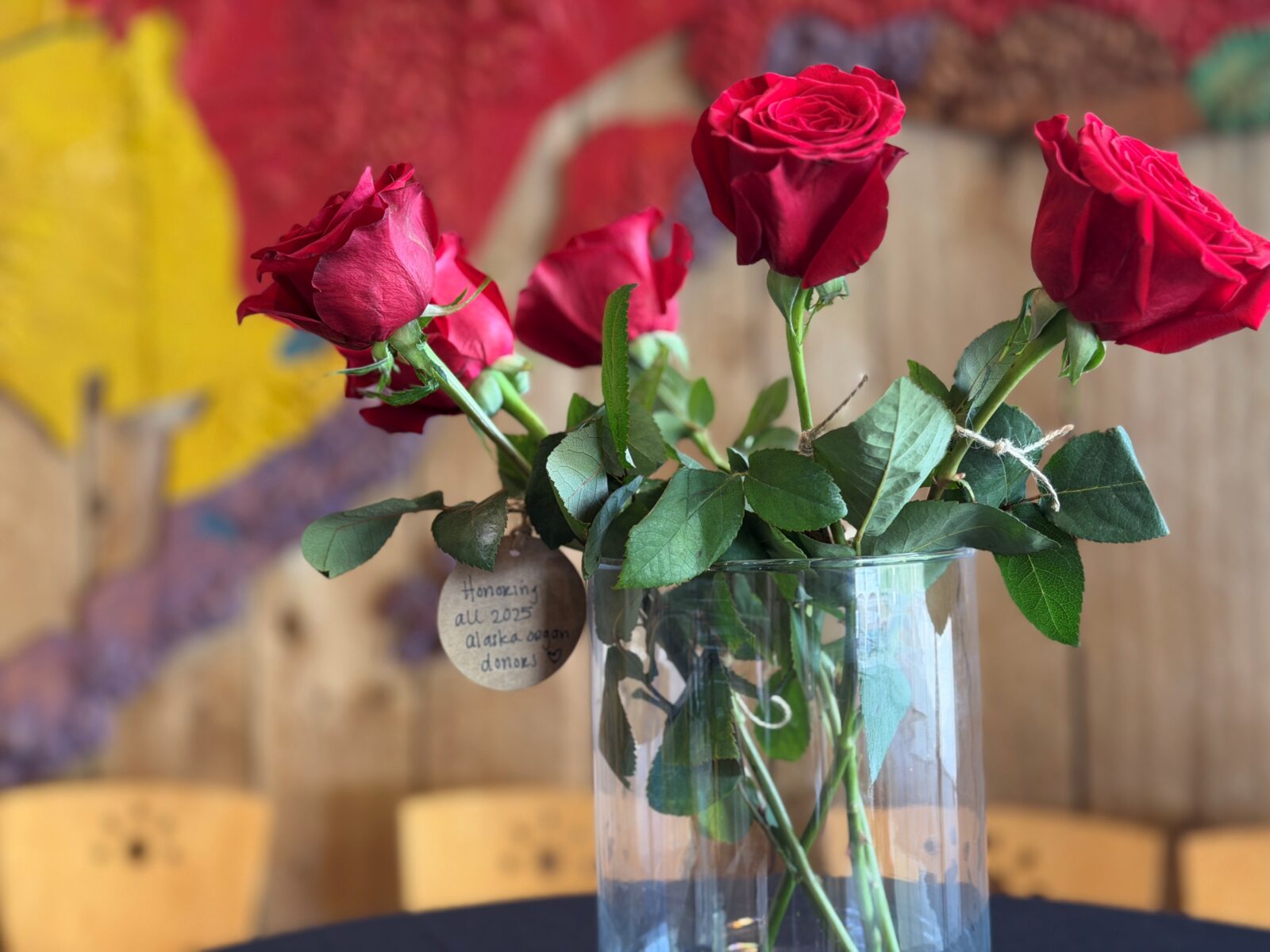
Each spring, something deeply significant takes place in Alaska, Montana, and Washington.
Governors, state officials, and community partners gather to honor people they never had the chance to meet — organ donors whose final act of generosity changed the lives of strangers forever. For the families who attend, it is a moment of recognition that is both deeply personal and profoundly public. For the donors themselves, it is a legacy made visible.
A Tradition Born from Generosity
The Governor’s Gift of Life Award Ceremony has its roots in Washington, where the tradition was first established in 1998 — inspired by a donor family who believed that the gift of life deserved to be honored at the highest level. Over time, the tradition expanded to Alaska and Montana, creating an annual opportunity for state leaders to stand alongside donor families and acknowledge the rare and remarkable decision their loved ones made.
Each ceremony is held in partnership between LifeCenter Northwest and the office of the state’s governor — a collaboration that transforms a deeply private act of generosity into a public celebration of legacy and the enduring impact of the gift of life.
Alaska: Where Every Donation Requires a Village
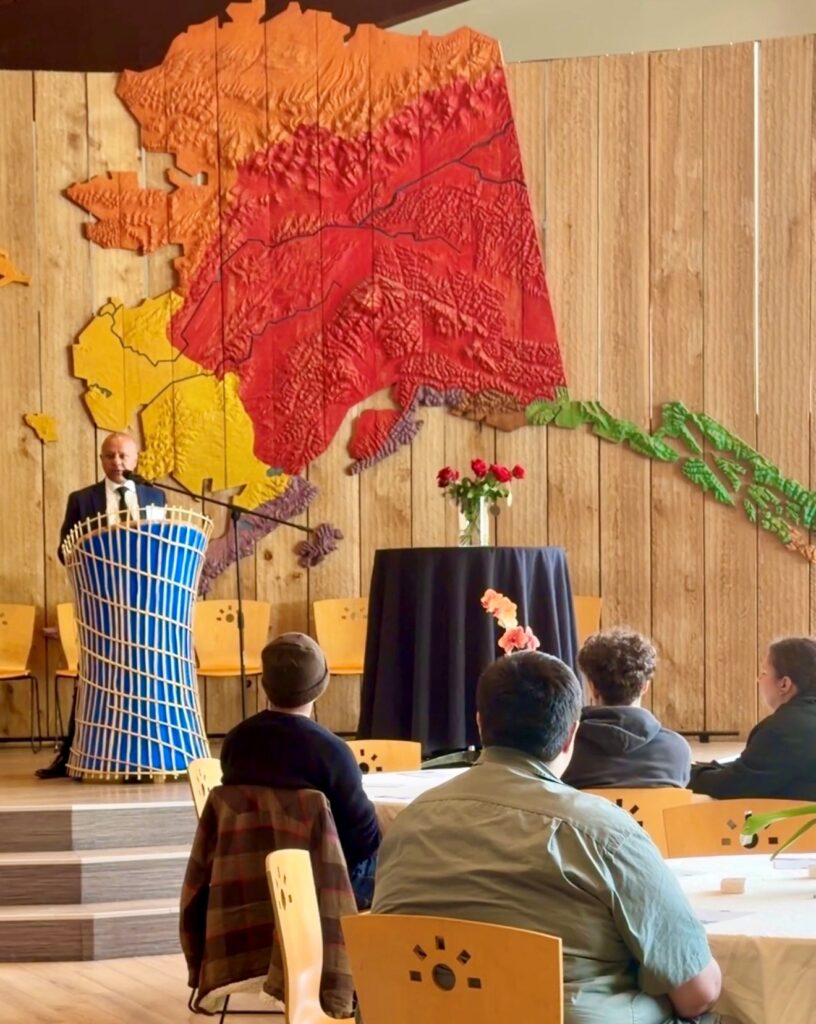
Organ donation in Alaska is unlike anywhere else in the country. Without transplant centers in the state, every donation requires extraordinary coordination — among hospitals, aviation partners, recovery teams, donor families, and out-of-state transplant programs — often across vast distances and in challenging conditions. Despite those complexities, 26 organ donors in Alaska provided 74 lifesaving transplants in 2025.
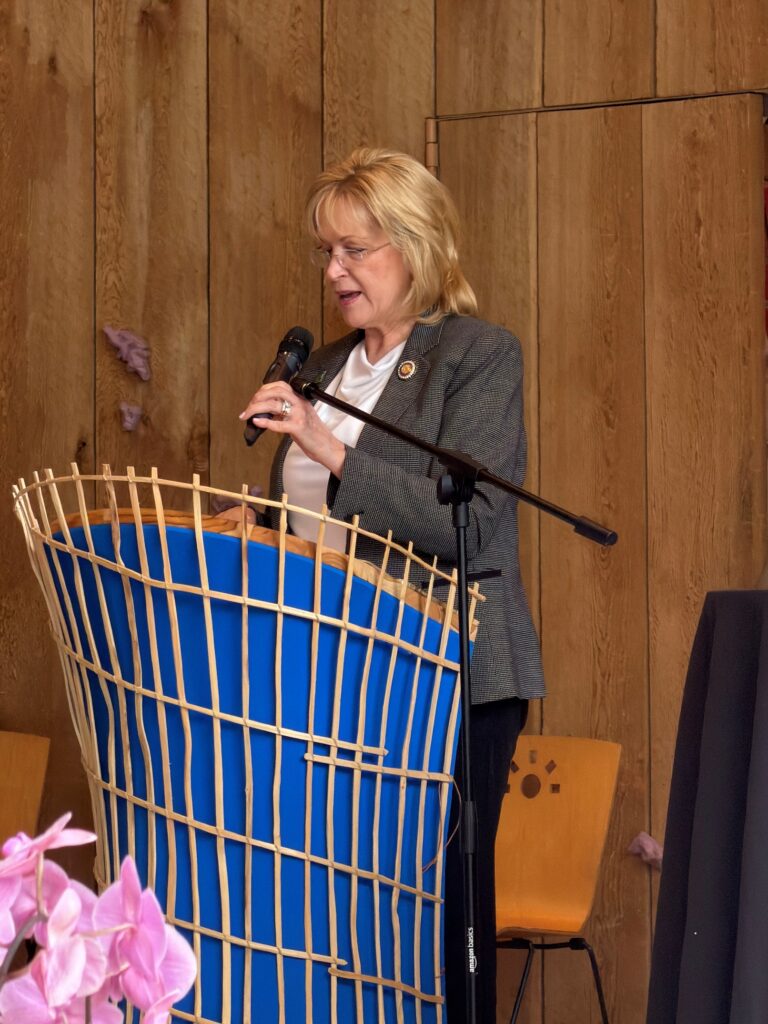
At this year’s Alaska’s ceremony, Lieutenant Governor Nancy Dahlstrom brought something rare to her role as the state’s representative — a personal connection to donation. A member of her own family had received the gift of sight from a cornea donor, and that experience gave her remarks a depth that resonated deeply with the families gathered in the room.
Courtney Miller Pickett also spoke, sharing the story of her partner Aaron Kohring, who became an organ donor after a fatal rugby injury in 2015. She spoke of grief, of loss, and of the unexpected comfort that comes from knowing that something lasting grew from something devastating.
Her story, like so many shared at these ceremonies, is a reminder of what organ donation truly means — not just a medical decision, but a profound act of love that continues long after it is made.
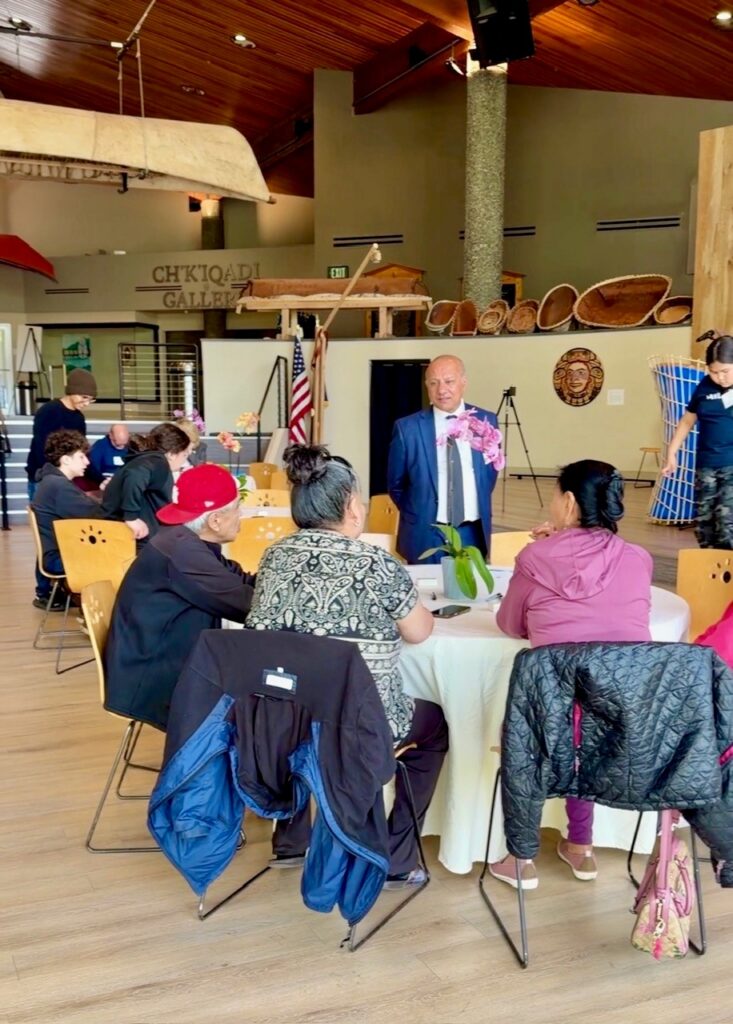
Montana: Honoring 73 Donor Heroes
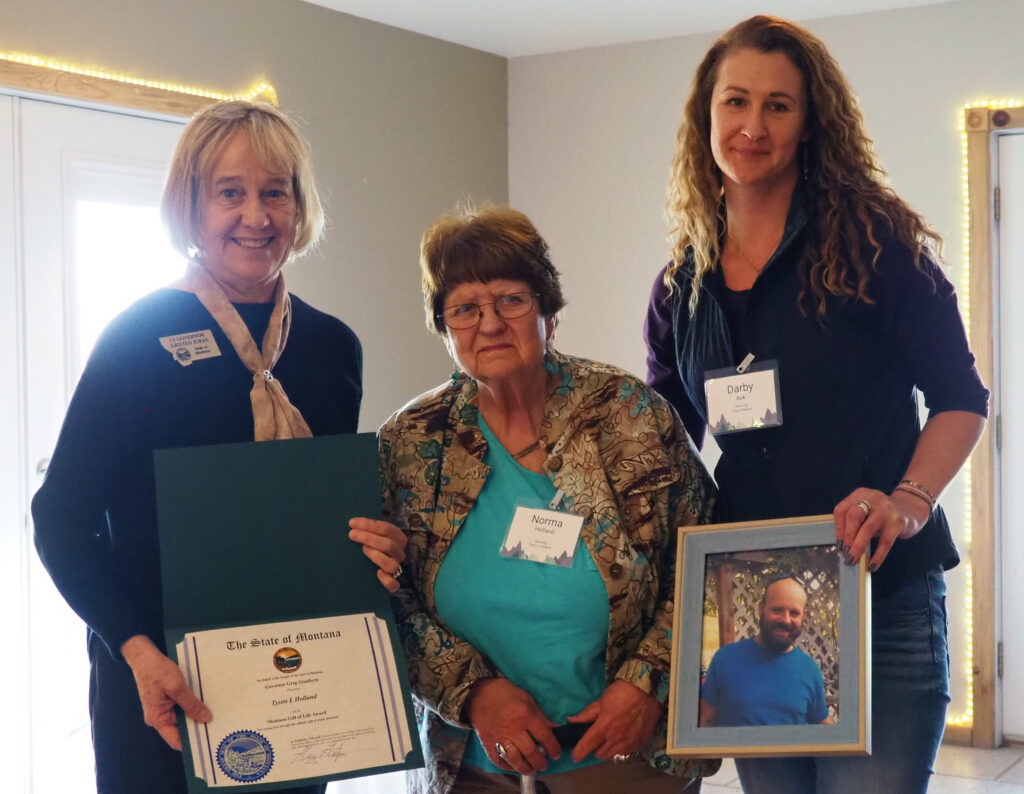
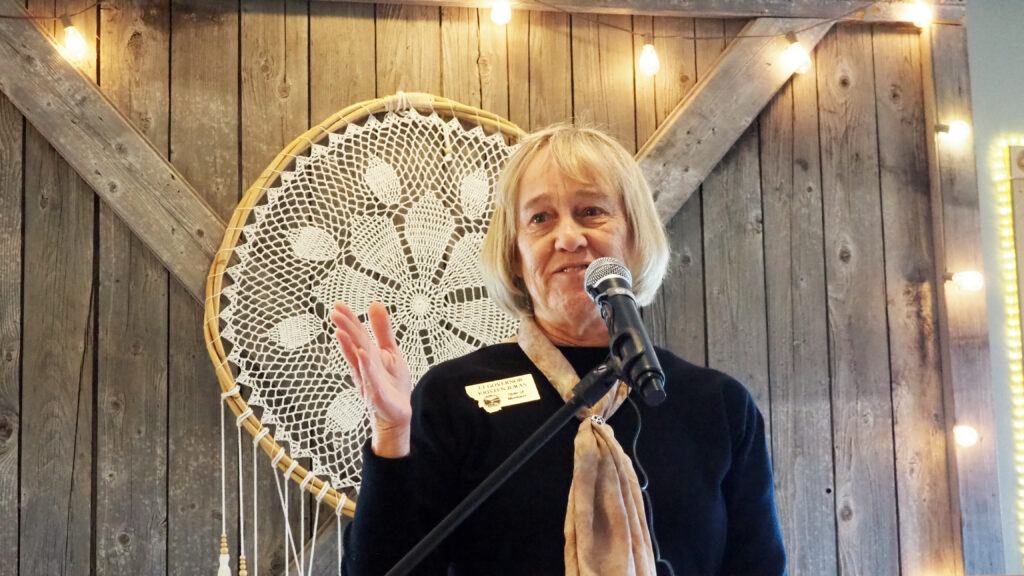
In Montana, 2025 was a historic year — 73 organ donors gave the gift of life, a record that speaks to the generosity of communities across the Big Sky State. At the ceremony, led by Lieutenant Governor Kristen Juras on behalf of Governor Greg Gianforte, families came together to celebrate their loved ones and the lives they made possible.
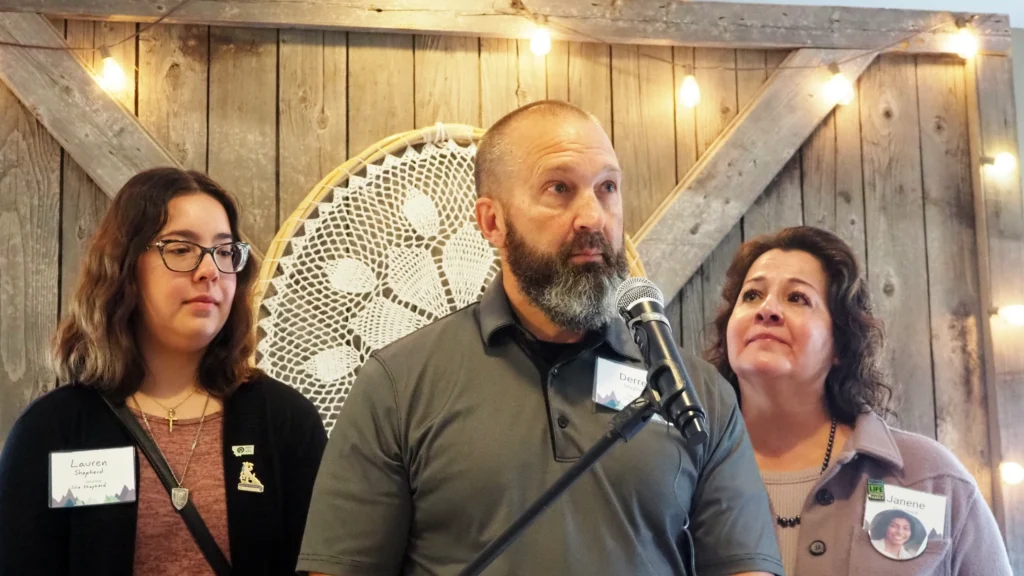
Among those who spoke during the ceremony was Derrek Shepherd, who has been sharing his family’s story for nearly a decade — and whose words continue to resonate with donor families who are navigating their own grief.
Derrek’s daughter Julie was 17 years old when she died in 2017 — a young woman known for her competitive spirit and her kindness. Julie donated her pancreas, liver, lungs, kidneys, and heart, saving six lives. Her heart went to another teenage athlete living with congenital heart disease, who later returned to competitive swimming — a sport Julie had loved.
Nearly ten years later, Derrek still finds meaning in telling Julie’s story and in the comfort that donation continues to bring his family in the aftermath of an unimaginable loss.
“The donation process has helped to ease the pain of her death,” Derrek said, “by giving us the knowledge that other people’s lives were helped.”
“The donation process has helped to ease the pain of her death,” Derrek said, “by giving us the knowledge that other people’s lives were helped.”
Washington: A Record Year of Generosity
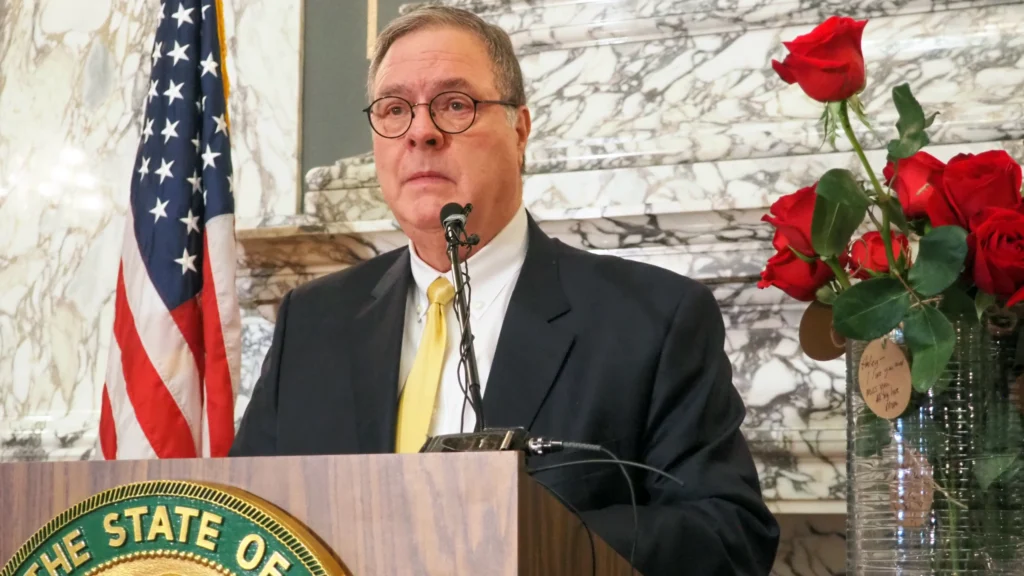
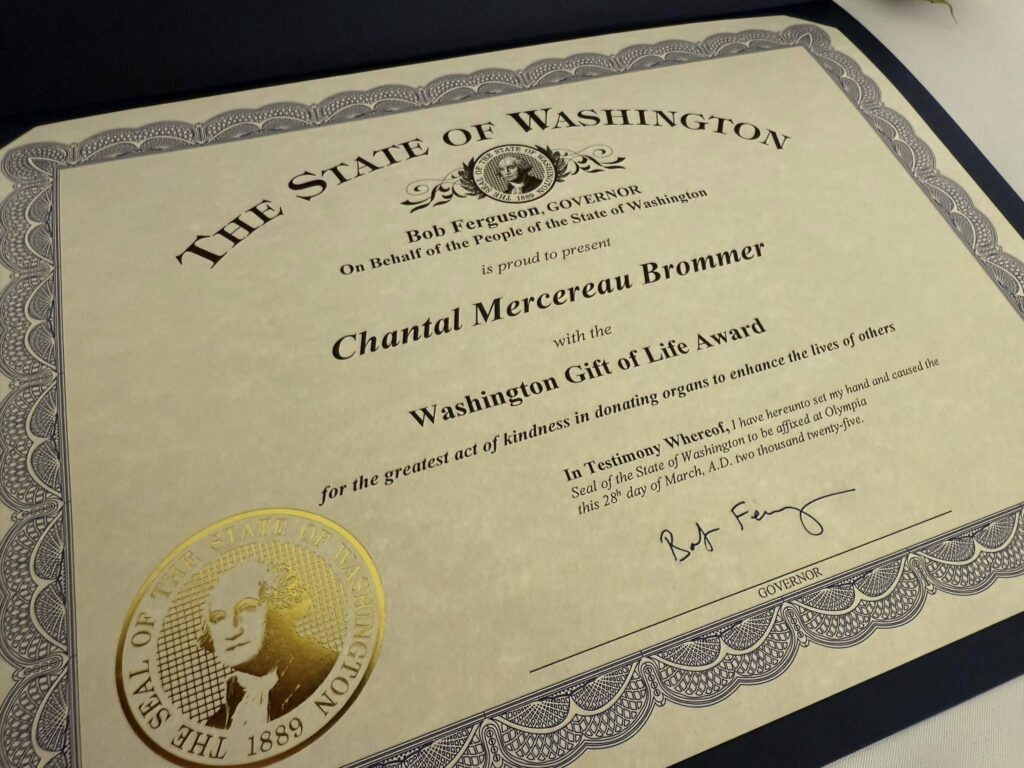
At this year’s Washington’s ceremony, held each April during Donate Life Month, state leaders and donor families came together to honor the 337 organ donors who made 2025 a record year. Representing Governor Bob Ferguson, Lieutenant Governor Denny Heck closed the ceremony by reflecting on how organ donation strengthens families and communities — and how its impact, in his words, can “echo well into the future.”
Among those honored was Linda Jarnagin, a Tri-Cities resident whose lifelong commitment to helping others found one final expression through donation.
When Linda suffered a catastrophic aneurysm just days before her 62nd birthday, her daughter, Kaitlin Jarnagin Burkett, faced a decision no family expects to make. For Kaitlin, the answer came naturally — it was simply the way her mother had always lived. Linda had spent 35 years supporting the Hanford cleanup effort, volunteered at her local food bank, taught others to sew, and routinely extended a hand to neighbors, friends, and strangers alike. Organ donation, in Kaitlin’s words, was “the ultimate last gift.”
Weeks later, letters arrived from a recipient’s family — including messages from children and a grandchild whose lives had been changed forever. “It made it all worth it,” Kaitlin said.
Her message to others is simple: talk to your family about your wishes. “A lot of people don’t realize the impact of that question at the Department of Motor Vehicles. One decision can help so many people.”
Why These Ceremonies Matter
For organ donor families, the Governor’s Gift of Life Award Ceremony is an acknowledgment of a decision made in one of the hardest moments of their lives. For state leaders, it is an opportunity to stand alongside residents whose generosity saved lives. And for all of us, it is a reminder that thousands of people across the region — including the nearly 2,300 of our Northwest neighbors — remain on the transplant waiting list, waiting for a decision that could change everything.
The families who attend these ceremonies often leave with the same message on their hearts: make your wishes known. Register as an organ donor. And perhaps most importantly, have conversations with the people you love about your decision to be an organ donor.
When loved ones know your wishes, they are better prepared to honor them — and that conversation, however difficult, can make all the difference.
Related Content
Over 300 Gather in Seattle to Honor Organ, Eye and Tissue Donors at LifeCenter Northwest Donation Celebration
Nearly 350 organ donor families, transplant recipients, and community advocates gathered at the University of Washington’s Husky Union Building for LifeCenter Northwest’s annual Seattle Donation Celebration. Co-sponsored by Lions World … Read More
What National Multiethnic Donor Awareness Month Means: A Journey Back to Health & Life
Kidney disease is treatable – because it is beatable. “If I die in this surgery, tell our child that I did everything I could to live,” I said to my … Read More
Carrying their legacy to Washington, D.C.
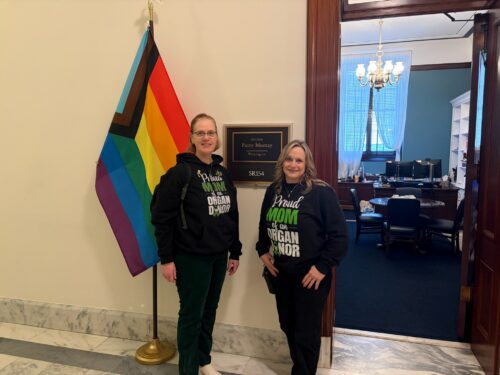
How two proud moms are strengthening communities through storytelling Last week in Washington, D.C., two mothers honored their sons in the most powerful way they could — by turning loss … Read More
