


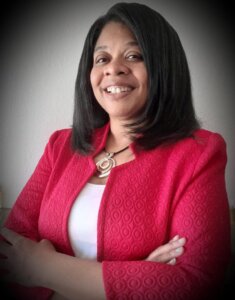
“If I can make it through this, I can make it through anything.”
That mindset has carried Carmelle Bias through some of life’s toughest challenges.
A business owner, radio host, and advocate for women entrepreneurs, Carmelle has spent years helping others find their voice. But when kidney disease entered her life, she had to learn how to use her own.
A life of purpose
Carmelle was diagnosed with lupus at age 16. She knew kidney disease could be a possibility someday. Her grandfather had both lupus and kidney disease. Still, doctors told her it wasn’t an immediate concern. So, she built her business. She launched a nonprofit. She started a radio show called Women Empowerment Talk Radio to help women entrepreneurs connect, learn and support one another. “My life didn’t stop,” she said.
When everything changed
In 2020, Carmelle learned her kidney function had dropped to just 10%. Doctors told her dialysis was likely still years away. Then life took an unexpected turn.
She battled a severe case of COVID-19. She lost her eyesight due to macular degeneration. Soon after, she developed symptoms she thought were pneumonia — constant coughing, fatigue and shortness of breath.
A friend urged her to go to the hospital. There, she learned her kidneys had failed. She started dialysis immediately.
Learning to speak up
Looking back, Carmelle wishes she had asked more questions earlier in her treatment. She assumed that if her kidneys got worse, someone would tell her exactly what to do. Instead, she found herself having to learn quickly.
Much of the journey fell on her shoulders. That’s when she decided: “I’m going to learn what I need to learn so I can continue on. I’ve got to figure this out.” That determination became her roadmap.
Becoming her own advocate
Once she started dialysis, Carmelle had one goal: Get off dialysis.
The three-day/week schedule was grueling. Being legally blind made the process even harder. At times, she had to remind healthcare providers to speak directly to her, so she understood what was happening during treatment.
But she kept showing up. She asked questions. She pushed forward.
Carmelle learned everything she could about treatment options. She completed medical tests, lab work, dental appointments and other requirements needed to become a candidate for a kidney transplant.
Then came “the call”
On an otherwise ordinary Friday in November 2024, Carmelle was finishing her dialysis treatment when she received the call she had been waiting for: a donor kidney was available. With just enough time to record her weekly radio show, she headed to the hospital for the transplant that would give her a second chance at life!
Understanding eGFR and kidney transplant equity
One important part of kidney care is a blood test called eGFR (estimated glomerular filtration rate), which helps estimate how well the kidneys are working.
Historically, the equation used to calculate eGFR included a race adjustment for Black patients. This often resulted in Black patients receiving a higher eGFR score, making their kidney function appear better than it was. In some cases, this delayed referrals to kidney specialists or placement on the transplant waiting list.
In 2021, the National Kidney Foundation and the American Society of Nephrology recommended a new race-free eGFR equation that no longer includes race as a factor. Laboratories across the country have since moved to this updated calculation. This change has helped create a more equitable path to care by ensuring that Black patients are evaluated using the same kidney function equation as everyone else. For many patients, it has improved access to earlier treatment discussions and waiting-list eligibility.
The takeaway: Know your eGFR, which is included as part of an annual check-up, and ask how it’s being calculated. As Carmelle’s story shows, your voice can be one of your most powerful tools.
Lessons from Carmelle’s Story
Carmelle’s experience is a reminder for anyone living with kidney disease — or supporting someone who is.
- Ask questions. Never assume you have all the information you need. Understanding your kidney health can help you make informed decisions sooner.
- Know your numbers. Pay attention to your kidney function and discuss changes with your healthcare team.
- Speak up about your needs. Whether it’s transportation, communication, or emotional support, your voice matters.
Related Content

Over 300 Gather in Seattle to Honor Organ, Eye and Tissue Donors at LifeCenter Northwest Donation Celebration
Nearly 350 organ donor families, transplant recipients, and community advocates gathered at the University of Washington’s Husky Union Building for LifeCenter Northwest’s annual Seattle Donation Celebration. Co-sponsored by Lions World … Read More

LifeCenter Northwest Celebrates National Multiethnic Donor Awareness Month
August is National Multiethnic Donor Awareness Month, an annual initiative run by the National Organ, Eye and Tissue Donation Multicultural Action Group (NMAG). The goal of National Multiethnic Donor Awareness … Read More
Why organ donation awareness matters in Hispanic communities
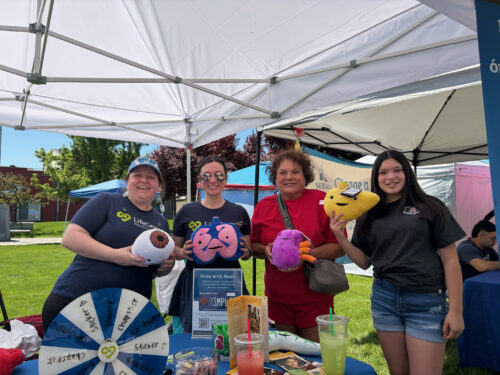
Building trust and understanding is essential to our mission. That’s why attending events like the Cinco de Mayo festival in Sunnyside, Wash., is so important. Understanding why organ donation matters … Read More
